Window tinting is a popular upgrade for Los Angeles drivers who want better heat control, UV protection, glare reduction, privacy, and a more customized vehicle appearance.
But choosing automotive tint in California requires more than picking a shade you like.
California regulates different vehicle windows differently, and several popular online summaries oversimplify the law. The current rules for front side windows, for example, involve both an 88% Visible Light Transmission requirement for qualifying film itself and a referenced 70% minimum transmission requirement for the completed glazing system.
Windshield rules are different. Rear-side windows are treated differently again. Rear-window tint has a mirror condition. Certain colors are prohibited. Medical provisions have their own requirements.
For Los Angeles drivers, the smartest approach is to combine good film performance with current legal compliance.
Luxury Glass Tinting provides professional automotive window tinting in Los Angeles using premium dyed, ceramic, nano-ceramic, and virtually clear films.
Here are the most important window tinting dos and don’ts to know before choosing your film.
Do Understand That Los Angeles Follows California Vehicle Tint Law
The first important distinction is geographic.
Automotive window tint in Los Angeles is governed primarily by the California Vehicle Code.
That means you should not search only for vague phrases such as:
- Los Angeles legal tint percentage
- LA tint limit
- California 70% tint law
and assume one percentage applies to every window.
California Vehicle Code §26708 treats:
- Windshields
- Front side windows
- Rear side windows
- Rear windows
differently.
Understanding the window location is the first step toward choosing compliant film.
Don’t Assume the Front Window Rule Is Simply “70% Tint”
This is probably the most common California tint-law misunderstanding.
The ordinary exception for qualifying aftermarket material on the front side windows immediately beside the front seats requires the material to be:
- Clear
- Colorless
- Transparent
- At least 88% VLT on its own
The completed glazing with that material installed must also satisfy the referenced Federal Motor Vehicle Safety Standard No. 205 requirements, including a 70% minimum light-transmission requirement.
So saying:
“70% tint is legal on California front windows”
does not accurately describe the whole rule.
There are requirements for both the film and the completed glazing.
Do Understand What VLT Means
Visible Light Transmission, or VLT, measures how much visible light passes through a material.
Higher VLT means more light passes through.
Lower VLT means darker glass.
For example:
- 88% VLT is very light
- 70% VLT is light
- 50% VLT is noticeably tinted
- 35% VLT is darker
- 20% VLT is very dark
- 5% VLT is extremely dark
But there is another detail that matters:
The film’s advertised VLT is not necessarily the VLT of the completed window.
Your factory glass already affects visible-light transmission.
Example
Suppose the existing glass transmits 80% of visible light.
If you apply a hypothetical 50% VLT film:
0.80 × 0.50 = 0.40
The completed glazing would theoretically transmit about 40% of visible light.
That is why professional installers need to think about the glass and film together.
Do Keep the Required Front-Window Certification
California’s qualifying front-side-window provision includes a certification requirement.
When a professional installer applies qualifying material, the driver must have the required certificate identifying the installer and film manufacturer.
If the owner installs qualifying material themselves, manufacturer certification requirements apply instead.
This is easy to overlook because most tint discussions focus entirely on darkness.
For regulated front-window installations, documentation matters too.
Don’t Ignore Damaged or Bubbling Front Window Film
California’s statute also addresses film condition.
Qualifying material covered by the front-side-window exception must be removed or replaced if it:
- Tears
- Bubbles
- Becomes worn
- Interferes with clear vision
Therefore, a film that was suitable when installed can still become a problem if it deteriorates significantly.
Persistent bubbling or distortion is also a practical reason to consider professional tint removal and replacement.
Do Know the Real California Windshield Tint Rule
Another common internet claim is:
“California allows tint on the top four inches of your windshield.”
That is not how the current statute describes the standard windshield exception.
California Vehicle Code §26708 allows transparent material on the topmost portion of the windshield when several conditions are met.
One of the main requirements is that the lower edge of the material be at least 29 inches above the undepressed driver’s seat, using the measurement procedure described in the law.
The material also cannot:
- Be red or amber
- Contain prohibited opaque lettering
- Distort vision
- Distort primary colors
- Create excessive reflected sunlight or headlight glare
So don’t rely on a universal four-inch rule without checking the actual California provision.
Don’t Tint the Full Windshield Based on a Generic “70%” Chart
The 70% figure often causes confusion.
The ordinary windshield rule is not simply:
“Anything 70% or lighter is legal across the entire windshield.”
The normal nonmedical windshield provision concerns qualifying material in the topmost area and includes specific positioning requirements.
Separate medical provisions exist for qualifying clear UV-protective material.
If you want windshield film, discuss the exact application with an installer familiar with California law instead of assuming that a light-looking film is automatically permitted everywhere.
Do Understand the Rear Side Window Rules
California treats side windows behind the driver differently from the front side windows.
Section 26708 specifically exempts:
Side windows that are to the rear of the driver.
This means the front-side 88% film provision does not apply to those windows in the same way.
Rear-side glazing therefore offers much greater flexibility for:
- Privacy
- Styling
- Glare reduction
- Heat-control film
However, other applicable vehicle rules still matter.
Don’t Forget the Rear-Window Mirror Requirement
The rear window is also treated differently.
California provides an exception for rear-window material when the vehicle has outside mirrors on both the left and right sides.
Those mirrors must provide the driver with the required rearward view, specified in the statute as at least 200 feet through each mirror.
So while rear tint is much less restricted than front-side tint under §26708, the mirror condition should not be left out of a legal guide.
Don’t Use Prohibited Red, Blue, or Amber Aftermarket Window Material
VLT is not the only consideration.
California Vehicle Code §26701 separately prohibits operating a motor vehicle with red, blue, or amber translucent aftermarket material in the windows, windshield, partitions, or wind deflectors.
That means a film can create legal problems because of its color even when darkness is not the main issue.
For normal automotive tinting, neutral charcoal, ceramic, and other conventional film appearances are much more practical choices.
Do Prioritize Nighttime Visibility
Legal compliance is not the same as comfortable driving.
Extremely dark film reduces visible-light transmission all the time, including at night.
That can make it harder to see through side windows when:
- Turning at dark intersections
- Reversing
- Entering parking garages
- Driving in rain
- Navigating poorly lit streets
- Looking for cyclists or pedestrians
Los Angeles has plenty of bright streets, but drivers also encounter dim residential neighborhoods, parking structures, canyon roads, and nighttime traffic.
Your tint should work after sunset as well as at noon.
Don’t Choose the Darkest Film Just for Heat Rejection
A darker film is not automatically a better heat-rejecting film.
This is one of the biggest mistakes buyers make.
Film darkness is measured primarily through VLT.
Heat performance depends on the film’s solar-control technology.
A high-performance ceramic film can provide strong solar heat rejection while remaining relatively light.
An inexpensive dark dyed film may look much darker but reject less total solar energy.
If keeping your vehicle cooler is the main objective, ask about:
- TSER
- Film technology
- VLT
- UV rejection
- Manufacturer specifications
rather than simply choosing the lowest VLT.
Do Consider Ceramic Tint for Heat Without Extreme Darkness
Ceramic and nano-ceramic films can be especially useful for Los Angeles drivers because they can provide premium solar performance without requiring extremely dark glass.
Quality ceramic film can offer:
- Solar heat rejection
- UV protection
- Reduced glare
- Good optical clarity
- Non-metallic construction
- Multiple shade choices
Luxury Glass Tinting currently offers ceramic automotive window tinting for customers who prioritize heat control and clarity.
Ceramic technology does not create a legal exemption, however.
The same California rules still apply to the window where the film is installed.
Don’t Assume Ceramic Film Is Automatically Legal
“Ceramic” describes film technology.
It does not mean:
- Legal on every window
- Exempt from VLT requirements
- Allowed across the entire windshield
- Automatically compliant because it looks light
A ceramic film can be compliant or noncompliant depending on:
- VLT
- Window location
- Existing glass
- Finished glazing
- Transparency
- Color
- Certification
- Application
Choose ceramic film for performance, then choose an installation that satisfies the applicable legal requirements.
Do Choose Film Based on Actual Performance
Premium window film should be selected using measurable characteristics rather than marketing language.
Useful specifications include:
VLT
How much visible light passes through?
TSER
How much total solar energy is rejected?
UV Rejection
How much UV radiation does the specific film block?
Infrared Performance
What portion of infrared energy does the manufacturer measure, and across what wavelength range?
Warranty
What does the manufacturer actually cover?
Film Construction
Is the film:
- Dyed
- Ceramic
- Nano-ceramic
- Virtually clear
- Another technology
The exact product matters much more than a generic label such as “premium tint.”
Don’t Assume the Highest IR Number Means the Best Tint
Infrared-rejection percentages can be useful, but they need context.
Different manufacturers may measure IR performance across different wavelength ranges.
A film advertising a very high infrared number does not necessarily reject that same percentage of total solar energy.
If heat control is your priority, consider TSER along with IR specifications instead of choosing the largest marketing number.
Do Use High-Quality Film
Film quality affects more than heat performance.
Premium automotive film can provide better:
- Optical clarity
- Color stability
- Adhesive performance
- Durability
- Warranty support
- Consistency
- Solar control
Luxury Glass Tinting’s current automotive lineup includes LLumar dyed, ceramic, nano-ceramic, and virtually clear film options.
The goal should not be to buy the most expensive film automatically.
It should be to select the product whose performance matches your priorities.
Don’t Buy Tint Based on Price Alone
A low-priced tint installation may be attractive, but compare what you are actually receiving.
Ask:
- What film manufacturer is being used?
- What exact series?
- Is it dyed or ceramic?
- What is the warranty?
- Which windows are included?
- Is old tint removal included?
- What heat performance does the product provide?
- What happens if the film bubbles or peels?
A premium ceramic installation and entry-level dyed-film installation are not the same product simply because both are described as “window tinting.”
Do Consider Virtually Clear Film When Visibility Is Important
Drivers sometimes assume they must choose between clear glass and dark tint.
Modern film provides another option.
Virtually clear ceramic films can add UV and solar-control performance while preserving a subtle factory-like appearance.
This can be useful when:
- Maximum visibility matters
- You do not want noticeably dark glass
- Existing factory privacy glass already provides enough darkness
- UV protection is a priority
- You prefer a cleaner OEM-style appearance
Luxury Glass Tinting currently offers LLumar AIR clear automotive film as part of its film selection.
Don’t Assume Darker Tint Means Better UV Protection
UV protection is another area where darkness is misleading.
A high-quality light or nearly clear film can provide excellent UV rejection.
Meanwhile, darkness alone does not prove how much UVA or UVB a product blocks.
Choose a film with published UV specifications rather than judging sun protection by how black the window appears.
Do Use Tint to Reduce UV Exposure
Quality automotive film can provide substantial UV protection.
That can benefit occupants as well as interior materials such as:
- Leather
- Vinyl
- Dashboards
- Upholstery
- Plastics
- Trim
It can help reduce one contributor to fading and deterioration.
However, tint should not be advertised as guaranteeing that interiors will never fade.
UV is only one contributor alongside visible light, heat, material chemistry, and age.
Don’t Treat Tint as an Anti-Theft System
Darker rear tint can make the interior less visible to someone casually looking into your vehicle.
That provides privacy.
It does not prevent theft.
Automotive tint cannot guarantee that someone will not:
- Break a window
- Enter the vehicle
- Steal visible belongings
Avoid leaving valuables inside a parked car regardless of how dark the windows are.
Tint provides visual privacy—not theft-proof glass.
Don’t Claim Standard Tint Makes Car Windows Shatterproof
Ordinary automotive solar-control tint should not be described as:
- Shatterproof
- Impact-proof
- Break-in proof
- Bullet-resistant
Standard automotive film is primarily selected for:
- Solar heat
- UV protection
- Glare
- Privacy
- Appearance
Specialized safety/security films are a different product category engineered around glass retention.
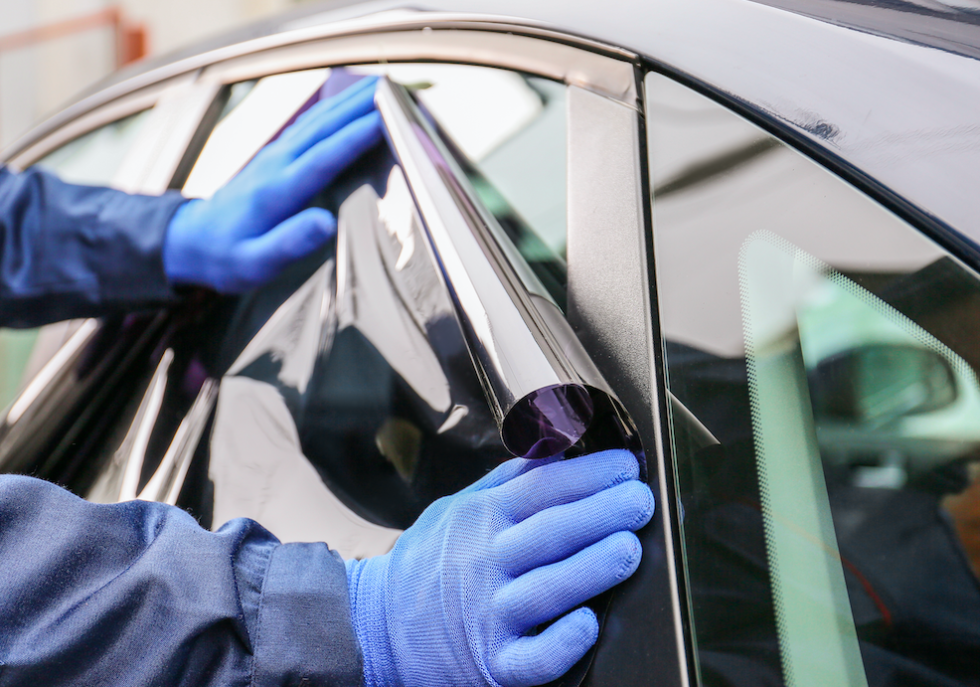
Do Use Professional Installation
Quality film can still look poor when installed incorrectly.
Professional automotive tint installation requires careful:
- Glass cleaning
- Film sizing
- Film handling
- Heat shaping on curved glass
- Moisture removal
- Edge finishing
- Inspection
Potential problems from poor installation include:
- Trapped contamination
- Creases
- Poor edges
- Peeling
- Misalignment
- Persistent bubbles
The installer matters as much as the film.
Don’t Assume Fresh Tint Is Defective Because You See Moisture
Automotive film is generally installed using a water-based application solution.
A small amount of moisture may remain temporarily between the film and glass.
During curing you may see:
- Mild haze
- Water patterns
- Small moisture pockets
- Temporary visual distortion
These can be normal.
They should gradually improve as the film dries.
Persistent contamination, large air bubbles, lifting edges, or other defects are different issues.
Do Follow Aftercare Instructions
Fresh film needs time to establish its bond.
Follow the installer’s guidance concerning:
- Rolling windows down
- Interior cleaning
- Cure time
- Moisture
- Inspection
There is no universal rule that every automotive film fully cures in exactly 24 hours.
Temperature, humidity, sunlight, vehicle storage, and film type all affect drying.
Don’t Roll Freshly Tinted Windows Down Too Soon
Operating side windows immediately after installation can disturb film edges before adhesion has developed sufficiently.
Follow the waiting period provided by your installer.
If you are unsure, ask before leaving the appointment.
Do Clean Tinted Windows Properly
Once the film has cured, tinted windows are relatively easy to maintain.
Use:
- Soft microfiber cloths
- Non-abrasive cleaners
- Gentle wiping
Avoid:
- Razor blades
- Sharp scraping tools
- Abrasive pads
- Cleaning methods prohibited by the film manufacturer
Appropriate care helps preserve clarity and appearance.
Don’t Assume a Medical Exemption Allows Any Dark Tint
California has medical provisions, but they are more specific than a general “doctor’s note exemption.”
Under §26708(e), qualifying clear, colorless, transparent UV-protective material may be installed on certain glazing when statutory requirements are satisfied and the driver carries certification from a licensed dermatologist.
California also has a separate provision for certain removable sun-screening devices supported by qualifying physician or optometrist documentation.
Those removable devices have their own specifications and cannot be used during darkness.
A medical condition therefore does not automatically allow unrestricted dark permanent film.
Do Ask About California Compliance Before Installation
Before agreeing to film on regulated vehicle windows, ask the installer:
- What is the film VLT?
- What will the finished glazing VLT be?
- Is the front-side material clear and colorless where required?
- Will I receive the required certification?
- What windshield provision applies?
- What rules apply to the rear glazing?
- Does my vehicle meet the rear-mirror condition?
- Is the selected film color permitted?
This conversation should happen before the film is installed.
Don’t Trust Old Online Tint Charts Without Verification
Window-tint pages are frequently copied from old sources.
Some still repeat:
- A universal four-inch windshield rule
- A simple 70% front-side-film rule
- Outdated medical-exemption summaries
- Incomplete rear-window guidance
California Vehicle Code §26708 was amended by legislation effective January 1, 2026.
Use current law rather than relying entirely on an undated infographic or forum post.
Do Remember That Factory Privacy Glass Is Different
Many SUVs, trucks, and crossovers come with darker rear glass from the factory.
This is often called privacy glass.
Factory-darkened glass can create:
- A darker appearance
- More rear-cabin privacy
But darkness alone does not tell you how well that glass controls solar heat or UV.
High-performance ceramic or virtually clear film may sometimes be added to appropriate factory privacy glass when the owner wants additional solar performance.
The installer should evaluate both the factory glass and the resulting appearance.
Don’t Assume Factory Privacy Glass Means You Already Have Ceramic Tint
Factory privacy glass and aftermarket ceramic film are different technologies.
Dark factory glass may look similar to tinted film from outside, but appearance is not proof of:
- TSER
- IR performance
- Ceramic construction
- UV specifications
Ask what the existing glass does before deciding whether additional film is worthwhile.
Do Balance Privacy With Night Driving
Rear-side windows provide more flexibility, but the darkest available tint is not automatically the best everyday choice.
Very low VLT may make it harder to see outward after dark.
Think about where you drive:
- Downtown Los Angeles
- Parking garages
- Residential streets
- Freeways
- Canyon roads
- Poorly lit areas
A tint that looks perfect parked in bright daylight may feel very different at midnight.
Don’t Assume Tint Guarantees Fuel Savings
Heat-rejecting tint can reduce solar heat entering the cabin.
That may reduce how hard the air-conditioning system needs to work under certain conditions.
But tint should not be sold as a guaranteed way to improve MPG or EV range.
Vehicle energy consumption depends on too many other variables.
The reliable benefit is solar heat reduction and improved cabin comfort.
Do Compare Dyed and Ceramic Film Based on Your Priorities
Not everyone needs premium ceramic tint.
Choose Dyed Film When:
- Budget matters most
- You mainly want privacy
- You want a darker appearance
- Basic glare reduction is enough
Choose Ceramic Film When:
- Heat rejection is a major priority
- You want strong performance in lighter shades
- UV protection matters
- You want premium optical performance
- You prefer non-metallic film
Choose Nano-Ceramic When:
- You prioritize premium solar performance
- You spend significant time in strong sun
- Comfort is more important than minimizing cost
Choose Virtually Clear Film When:
- Visibility is a high priority
- You want minimal appearance change
- UV and heat control matter more than privacy
Do Ask These Questions Before Booking Window Tint
A professional installer should be able to answer:
- What film manufacturer do you use?
- What exact film series will be installed?
- What type of film is it?
- What is its VLT?
- What is its TSER?
- What UV rejection does it provide?
- What warranty applies?
- Which California rules apply to my requested windows?
- Will I receive any legally required certification?
- How long should I wait before rolling down the windows?
- What should I expect during curing?
- How should I clean the film?
Clear answers are usually a better indicator of professionalism than exaggerated claims about blocking “all heat.”
Quick Los Angeles Window Tint Dos and Don’ts
| Do | Don’t |
|---|---|
| Check California law for each window | Assume one percentage covers the entire vehicle |
| Understand VLT | Judge performance by darkness alone |
| Compare TSER for heat performance | Assume the biggest IR number means best tint |
| Keep required certification | Throw away tint documentation |
| Consider nighttime visibility | Choose extremely dark tint only for style |
| Use high-quality film | Buy entirely on lowest price |
| Follow curing instructions | Roll windows down immediately |
| Choose UV-rated film | Assume dark tint automatically blocks more UV |
| Use tint for privacy | Call tint an anti-theft system |
| Ask about factory glass | Assume privacy glass equals ceramic film |
| Use professional installation | Assume every tint installer understands current law |
| Verify current statutes | Rely on old online tint charts |
Frequently Asked Questions
Does Los Angeles have different automotive tint laws from California?
Los Angeles drivers are subject to California vehicle-window requirements. California Vehicle Code §26708 is the key statute governing applied material on vehicle windows and windshields.
What is the legal tint percentage for front windows in Los Angeles?
The current ordinary front-side-window exception is more specific than a single percentage. Qualifying film itself must have at least 88% VLT, and the completed glass-and-film system must meet the referenced federal 70% minimum light-transmission requirement, along with other conditions.
Is 70% film automatically legal on the front side windows?
No. The law states that the qualifying material itself must have at least 88% VLT. The 70% figure applies to the completed glazing under the referenced federal requirement.
Can I install 35% tint on the front side windows?
A typical 35% film would not meet the ordinary §26708(d) requirement that qualifying applied material itself have at least 88% VLT.
Can rear side windows be darker?
California §26708 exempts side windows to the rear of the driver from its general prohibition, so they are treated differently from the front-side windows.
Can I tint the rear windshield?
California provides an exception for rear-window material when qualifying outside mirrors are installed on both sides and provide the required rearward view.
Can I tint the entire windshield with light ceramic film?
The ordinary windshield exception does not simply allow any light film over the full windshield. It applies to qualifying material at the topmost portion under specific placement requirements. A separate medical provision exists for qualifying clear UV film.
Is California’s windshield strip four inches?
The current statute uses a specific placement test: the lower edge of the allowed topmost material must be at least 29 inches above the undepressed driver’s seat using the statutory measurement procedure.
Is ceramic tint legal in Los Angeles?
Ceramic technology itself is neither legal nor illegal. Compliance depends on where the film is installed, its VLT, the existing glazing, color, transparency, certification, and other applicable requirements.
Does a medical condition allow dark front-window tint?
Not automatically. California has specific permanent clear-film and removable sun-screening-device medical provisions rather than an unrestricted dark-film exemption.
Is red tint legal in California?
California prohibits red, blue, and amber translucent aftermarket material in motor-vehicle glazing.
Does darker tint reject more heat?
Not necessarily. Premium ceramic film can provide better solar performance than much darker lower-performance film.
Do tinted windows block UV?
Many premium automotive films provide approximately 99% or more UV protection, but the exact performance depends on the product.
Does tint make vehicle windows harder to break?
Standard solar-control automotive film should not be described as a dedicated security or shatterproof system.
Final Thoughts: Tint Smart, Not Just Dark
Automotive window tint can be an excellent upgrade for Los Angeles driving.
The right film can provide:
- Better solar heat control
- Strong UV protection
- Reduced glare
- Additional privacy
- Improved vehicle appearance
- A more comfortable cabin
But none of those benefits require ignoring visibility or California law.
The smartest approach is to choose the film based on performance, window position, VLT, finished glazing, driving conditions, appearance, and current legal requirements.
Luxury Glass Tinting provides professional automotive window tinting in Los Angeles with premium LLumar dyed, ceramic, nano-ceramic, and virtually clear options.
Whether your priority is heat control, UV protection, privacy, or style, the goal should not be to install the darkest film possible.
The goal should be to install the right film, on the right glass, with the right performance and legal considerations for the way you actually drive.


